Connecticut’s agricultural fairs are living history. Run largely by volunteer agricultural societies, Lions clubs, and granges, they preserve traditions — ox pulls, livestock judging, home-canning competitions — that reach back two centuries. The Association of Connecticut Fairs counts dozens of them, from one-day grange fairs to four-day extravaganzas.
This guide explains where Connecticut’s fairs came from, what to expect when you go, and how to find the right one near you.
A Two-Century Tradition
The Brooklyn Fair in the Quiet Corner traces its roots to 1809 and bills itself as the oldest continuously operating agricultural fair in the United States. For over 200 years it has gathered farmers and families to show livestock, compete for ribbons, and celebrate the harvest.
That heritage runs throughout the state. The Durham Fair, established in 1916, grew into Connecticut’s largest, while hill-country fairs like the Harwinton Fair (founded in the 1850s) and shoreline fairs like the Guilford Fair (since 1859) have anchored their communities for generations.
What to Expect at a Connecticut Fair
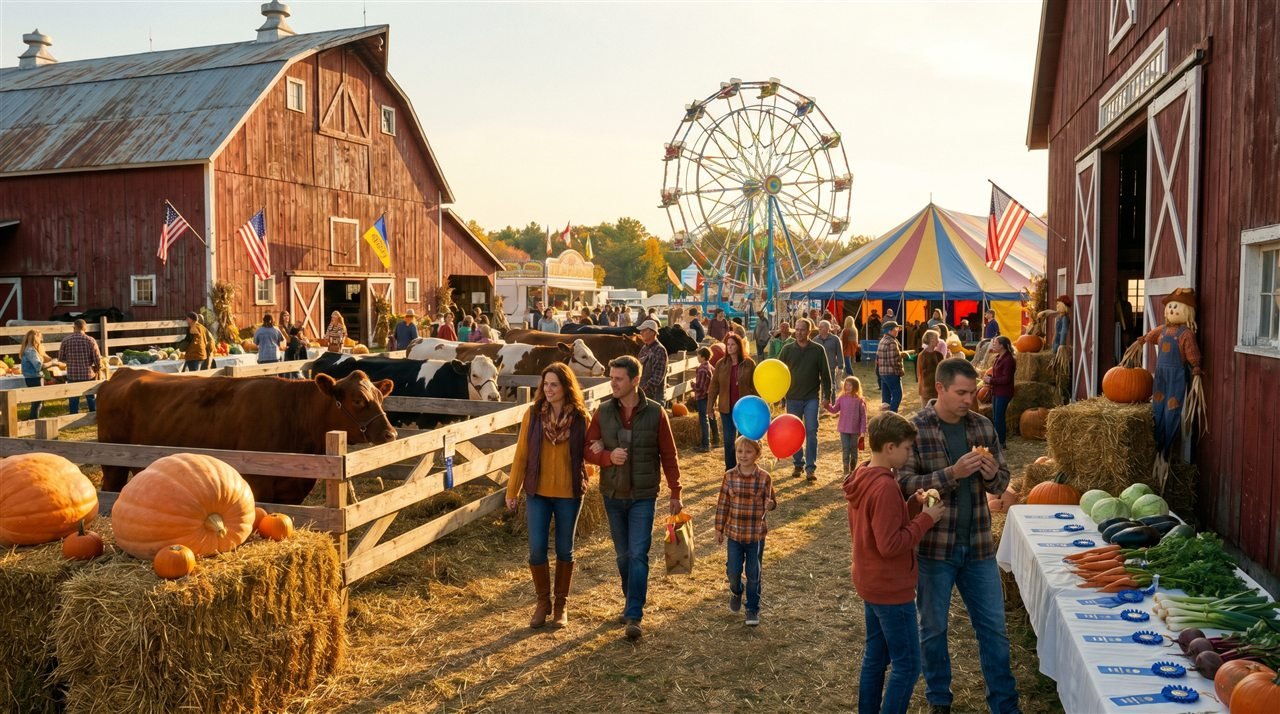
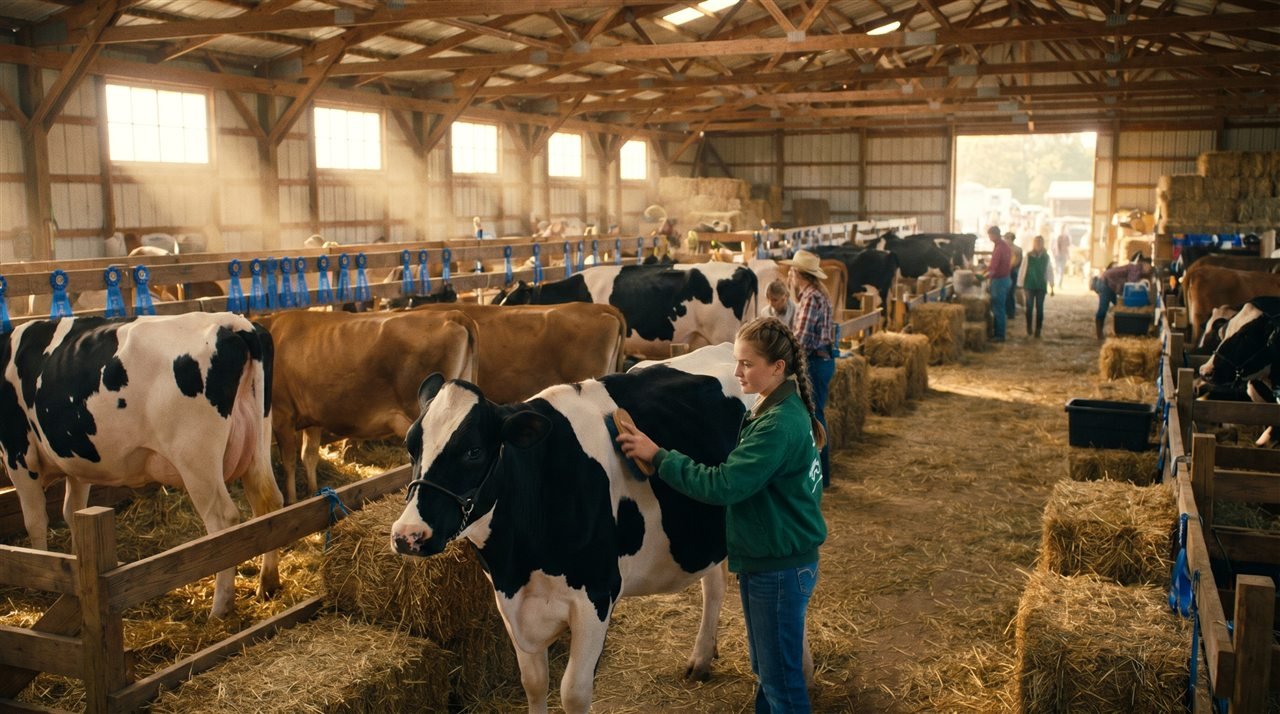
The heart of every agricultural fair is the barn: dairy cattle, sheep, goats, poultry, and rabbits, shown by 4-H youth and seasoned farmers alike. Around it you’ll find pulling competitions (oxen, horses, and tractors), exhibit halls full of prize vegetables, flowers, quilts, and pies, a midway of carnival rides, and food booths run by local clubs.
Many fairs add a demolition derby, live music, and antique-engine displays. The Woodstock Fair and the Hebron Harvest Fair are good examples of the full-scale experience, both drawing big crowds in September.
Fairs by Region
In the Litchfield Hills, look to Goshen, Bethlehem, Bridgewater, and Terryville. In Greater Hartford, the Berlin Fair, the Four Town Fair in Somers, and the Wapping Fair in South Windsor carry the tradition.
Along the shoreline and south-central Connecticut, North Haven, Orange, and Wolcott host community fairs, while the eastern Mystic Country and Quiet Corner offer North Stonington, Lebanon, and the Hamburg Fair in Lyme.
Grange & 4-H Fairs
For a smaller, more intimate experience, seek out the grange and 4-H fairs. Events like the Cannon Grange Fair in Wilton, the Granby Grange Fair, and the Tolland County 4-H Fair are often free and focused on the pure agricultural and craft competitions at the core of the fair tradition.
Whichever you choose, you’ll be supporting a piece of Connecticut’s rural heritage that the state’s agricultural societies have kept alive for generations.